Innovative Uses for Fiberglass in Modern Theme Parks


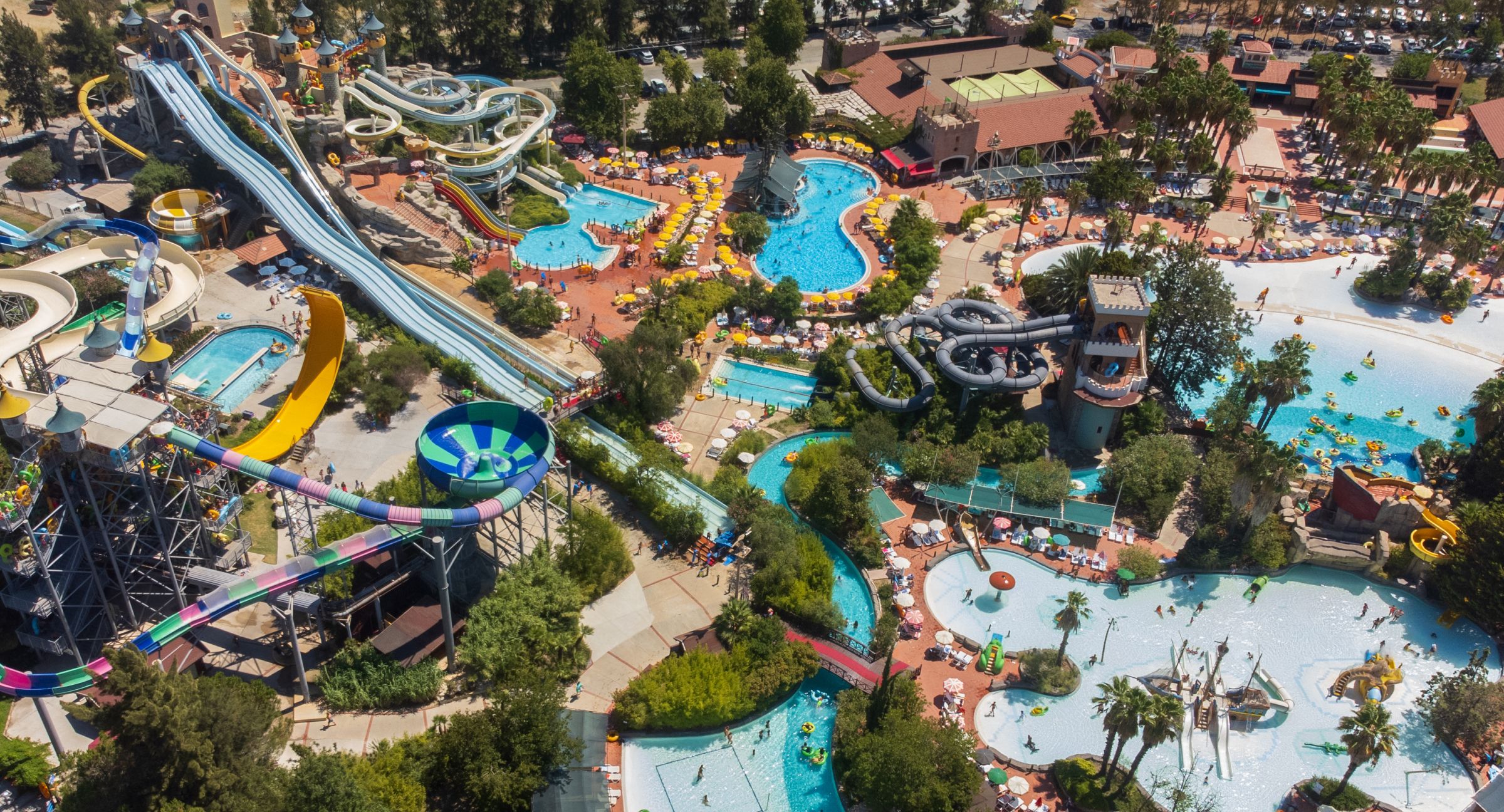
Fiberglass in theme parks serves as the primary material for ride structures, themed facades, sculptural props, water features, and architectural elements — combining the structural strength needed for safety-critical applications with the sculptural flexibility required for immersive theming. Fiberglass reinforced plastic (FRP) is a composite material made by embedding glass fiber strands in a polymer resin matrix, producing a finished product that is stronger than steel by weight, resistant to UV degradation and moisture, and moldable into virtually any shape. We specialize in custom fiberglass fabrication for the themed entertainment industry, producing everything from 40-foot character sculptures to ride vehicle shells and rockwork facades. This guide covers the key applications, material advantages, and fabrication process that make FRP the material of choice for modern theme park design.
What Is FRP and Why Theme Parks Rely on It
Fiberglass reinforced plastic (FRP) combines glass fiber reinforcement with a thermoset resin (typically polyester, vinyl ester, or epoxy) to create a composite material with a unique combination of properties that no single material can match. The glass fibers provide tensile strength and rigidity, while the resin matrix provides weather resistance, chemical stability, and the ability to assume complex geometric shapes through mold fabrication.
Theme parks rely on FRP because their operational environment demands materials that simultaneously meet structural engineering requirements, creative design intent, and extreme durability standards. A themed facade must look like ancient stone, weigh a fraction of actual stone, withstand hurricane-force winds, resist UV degradation for 15 to 20+ years, and meet fire retardant building codes. FRP delivers on all five requirements — which is why an estimated 70% to 80% of visible themed elements in major parks are fiberglass composites.
Key Takeaway: Fiberglass reinforced plastic (FRP) combines glass fiber tensile strength with polymer resin weather resistance to create a composite material that is stronger than steel by weight, UV stable for 15 to 20+ years, fire retardant, and moldable into any shape — making it the dominant material for themed entertainment with 70% to 80% of visible park elements using FRP composites.
Theme Park Applications for Fiberglass Composites
FRP serves five primary application categories in modern theme park design, each leveraging different material properties for specific operational requirements.
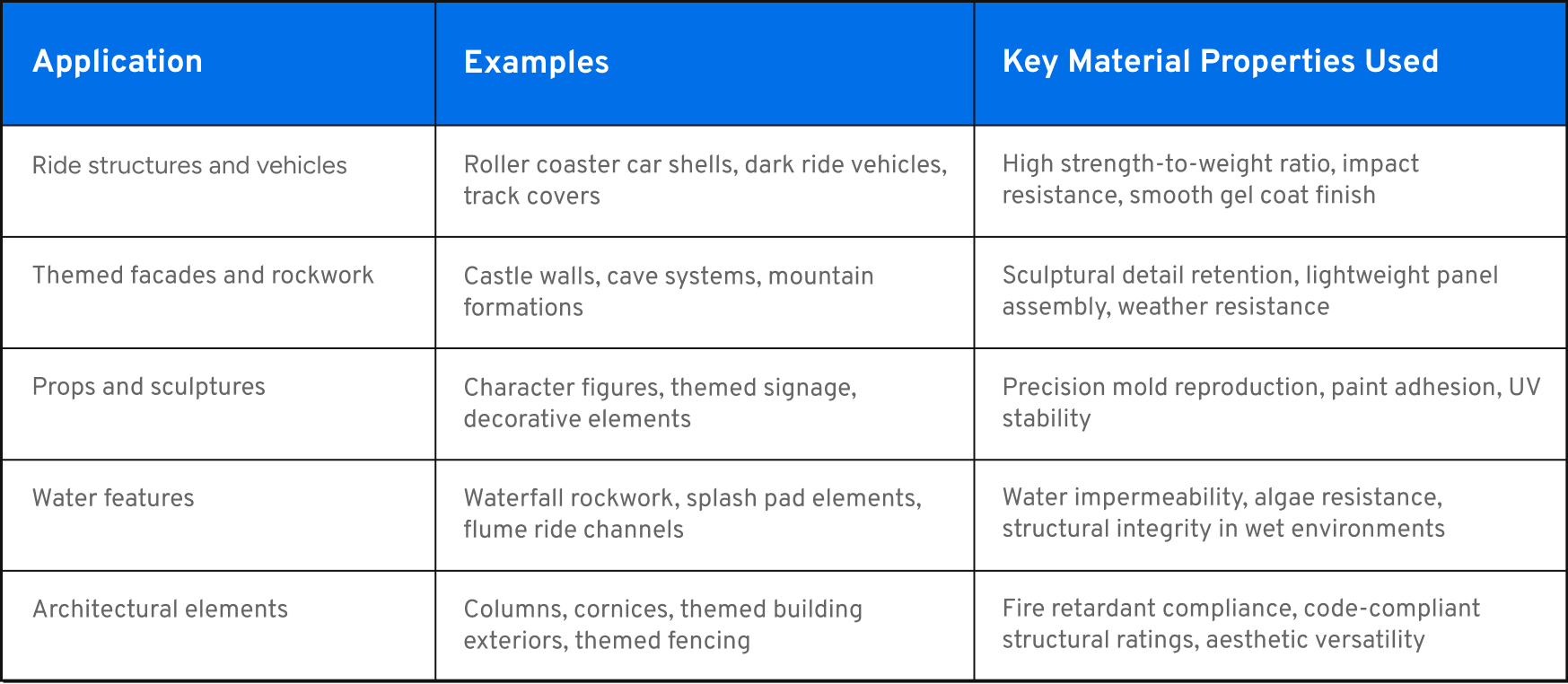
Each application starts with custom mold fabrication — the process of creating a negative form (the mold) from an original sculpt, then using that mold to produce identical fiberglass parts. A single mold can produce dozens to hundreds of consistent copies, making FRP economical for repeating elements across large-scale park environments.
Ride structures and vehicle shells represent the most safety-critical FRP in amusement parks application. These components undergo structural testing, fatigue analysis, and regulatory certification before installation. The combination of high strength-to-weight ratio and consistent manufacturing quality makes FRP the preferred material for ride OEMs worldwide.
Key Takeaway: FRP serves five theme park application categories — ride structures, themed facades, props and sculptures, water features, and architectural elements — with each application leveraging specific material properties from the composite's unique combination of strength, weather resistance, moldability, and fire retardant compliance.
Material Property Advantages Over Alternatives
FRP outperforms traditional construction materials across the specific performance dimensions that theme park environments demand. The following comparison maps fiberglass composite advantages against common alternative materials.
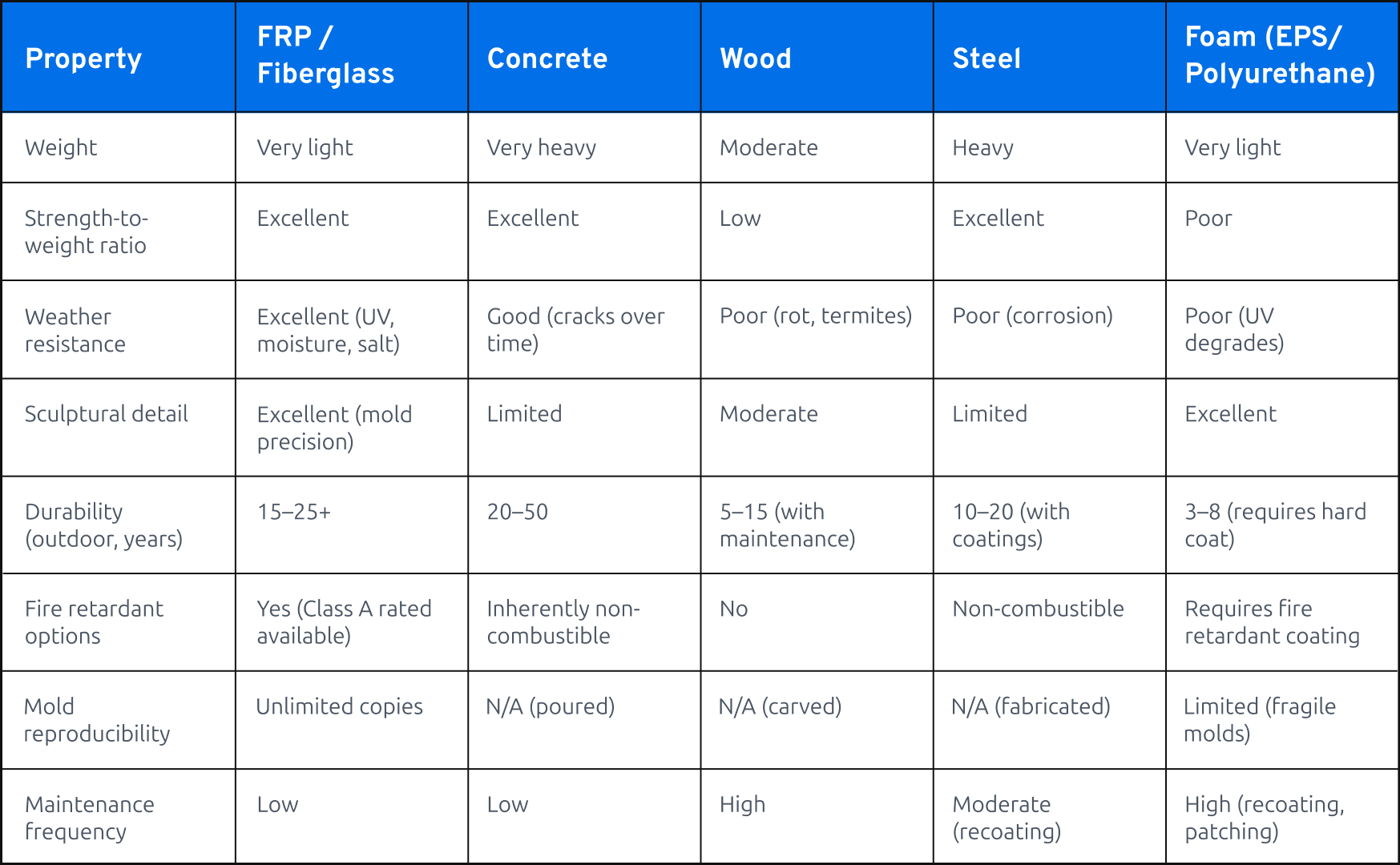
The most significant advantage for theme park operators is the combination of sculptural detail with long-term durability. Foam sculptures offer comparable detail but degrade in 3 to 8 years outdoors. Concrete provides longevity but cannot achieve the intricate surface detail of mold-produced FRP. Fiberglass composites deliver both — detailed reproduction and 15-to-25-year outdoor service life with minimal maintenance.
Key Takeaway: FRP outperforms alternatives by combining excellent sculptural detail (matching foam) with 15-to-25-year outdoor durability (matching concrete), lightweight panel assembly (5x to 10x lighter than concrete), and fire retardant compliance — a combination no single traditional material achieves.
How Fiberglass Theme Park Props Are Made
Custom fiberglass fabrication for theme parks follows a multi-stage process from original sculpt to finished, installed product. Understanding this process helps procurement and design teams plan timelines, budgets, and material specifications.
Stage 1: Sculpt and Design
Artists create the original sculpture or architectural element at full scale or scaled dimensions using clay, foam, or digital sculpting (CNC-milled from 3D files). The sculpt captures every surface detail that will transfer to the final fiberglass piece.
Stage 2: Mold Fabrication
A mold is built over the original sculpt using fiberglass and resin, creating a negative impression that captures surface detail down to sub-millimeter resolution. Molds are designed for the specific production run — simple open molds for single-sided parts or matched molds for complex, enclosed geometries.
Stage 3: Lamination (Layup)
Glass fiber mat or woven roving is placed into the mold and saturated with catalyzed resin. Multiple layers build to the specified wall thickness (typically 3/16" to 1/2" depending on structural requirements). A gel coat — the outer resin layer that provides the finished surface — is applied first to ensure a smooth, UV-stable exterior.
Stage 4: Curing and Demolding
The laminated fiberglass cures (hardens) through an exothermic chemical reaction over 2 to 24 hours depending on resin type and part thickness. Once cured, the part is removed from the mold, trimmed, and inspected for structural integrity and surface quality.
Stage 5: Finishing and Installation
Parts are sanded, primed, and painted using automotive-grade or marine-grade coatings for maximum outdoor durability. Structural steel frameworks or mounting hardware are bonded or mechanically fastened before final installation on-site.
Key Takeaway: Fiberglass theme park props are made through a five-stage process — sculpt creation, mold fabrication, glass fiber lamination with gel coat, curing and demolding, and automotive-grade finishing — with mold fabrication as the key investment that enables repeatable, consistent production of identical parts.
Frequently Asked Questions
Why is fiberglass used in theme parks?
Fiberglass provides the combination of sculptural detail, structural strength, weather resistance, and fire retardant compliance that theme park environments demand. FRP is 5 to 10 times lighter than concrete, lasts 15 to 25+ years outdoors, and reproduces fine detail through mold fabrication — making it the dominant material for themed elements.
How long does fiberglass last outdoors?
Fiberglass composites with UV-stable gel coat and proper maintenance last 15 to 25+ years in outdoor environments, including exposure to direct sunlight, rain, salt air, and temperature cycling. Marine-grade resins and coatings extend service life in the most demanding coastal and tropical climates.
What is FRP used for in construction?
FRP is used in construction for architectural cladding, structural panels, corrosion-resistant piping, pedestrian bridges, cooling towers, and decorative elements. In themed construction specifically, FRP produces facades, rockwork, columns, and sculptural elements that replicate any material appearance at a fraction of the weight.
Is fiberglass safe for amusement park rides?
Fiberglass composites used in ride structures undergo rigorous structural testing, fatigue analysis, and regulatory certification. FRP ride vehicle shells and structural components meet ASTM standards and are certified by ride manufacturers and third-party inspectors before installation. Fire retardant formulations meet Class A fire ratings.
How are fiberglass theme park props made?
Props are made through a five-stage process: original sculpt creation, mold fabrication from the sculpt, glass fiber lamination with gel coat in the mold, curing and demolding, and finishing with automotive-grade paint and installation hardware. A single mold can produce hundreds of identical copies.
Bring Your Vision to Life in FRP
Fiberglass in theme parks enables the creative ambitions of designers while meeting the engineering and durability requirements of operators. From ride vehicle shells to 40-foot character sculptures, FRP composites transform design concepts into installed, weather-resistant, code-compliant reality.
We bring decades of custom fiberglass fabrication experience to every project — from initial sculpt consultation through mold production, lamination, finishing, and on-site installation. Contact us to discuss your project requirements and receive a fabrication timeline and estimate.
 Message Us
 Repair
 Message Us
 Repair