Eco-Friendly Manufacturing Practices Across Composites and Plastics


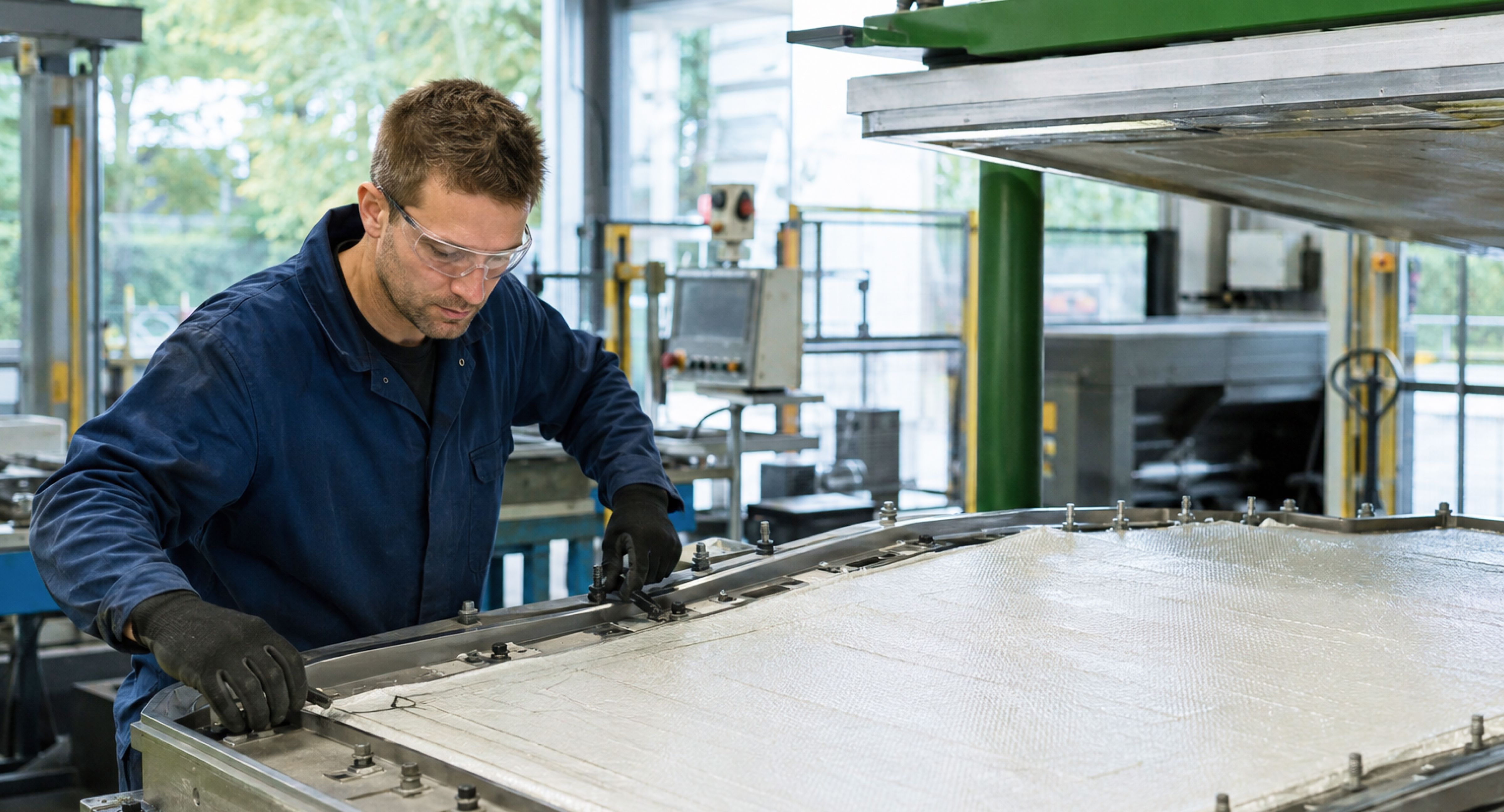
Sustainable manufacturing has become a defining priority for composites and plastics producers, not a side initiative. Sustainable manufacturing in this industry means reducing material waste, cutting emissions, and extending product lifecycles while still meeting strict performance specifications. Buyers and regulators now expect green production data alongside standard quality metrics, which pushes manufacturers to rethink processes from raw material selection through final part disposal.
What Sustainability Challenges Do Composites and Plastics Manufacturers Face?
Composites and plastics manufacturers face three core sustainability challenges: resin and material waste, energy-intensive curing processes, and end-of-life disposal of fiber-reinforced parts. Open-mold layup, for example, releases volatile organic compounds (VOCs) into the air and generates excess scrap resin that cannot be reclaimed. Plastic fabrication adds its own pressure, since petroleum-based feedstocks and high-temperature molding both carry a measurable carbon cost. Environmentally conscious manufacturing requires addressing each of these points directly rather than offsetting them after the fact.
Key Takeaway: Resin waste, VOC emissions, and part disposal are the three sustainability pressure points that manufacturers of composites and plastics must address simultaneously.
How Do Closed-Mold Processes Reduce Emissions and Waste?
Closed-mold processes reduce emissions and waste by containing resin within a sealed tooling system, cutting VOC emmisions by up to 90% compared to open-mold layup. Methods like resin transfer molding (RTM) and vacuum infusion inject resin under controlled pressure, so material goes only where the part requires it. This containment also protects workers from airborne styrene exposure and keeps facilities compliant with tightening air-quality regulations. For manufacturers pursuing green production certifications, closed-mold tooling is often the single most impactful equipment investment available.
Key Takeaway: Closed-mold methods such as RTM and vacuum infusion dramatically reduce VOC emissions while improving resin control and worker safety.
How Can Material Efficiency Improve Composites and Plastics Production?
Material efficiency improves composites and plastics production by matching resin and reinforcement volumes precisely to part geometry, eliminating the over-pour common in manual processes. Automated resin metering, near-net-shape tooling, and reclaimed regrind in plastic fabrication all shrink the gap between raw input and finished output. Manufacturers that track scrap rates by production line typically find that 10-15% of material costs are recoverable through tighter process control alone, directly supporting sustainable manufacturing goals without new capital equipment.
Key Takeaway: Precise resin metering and regrind reuse commonly recover 10-15% of material cost while advancing sustainability targets.
What Durability and Lifecycle Benefits Do Fiberglass Components Offer?
Fiberglass components offer sustainability benefits through longevity, often outlasting steel or aluminum parts by decades in corrosive or outdoor environments. Because fiberglass resists rust, rot, and UV degradation, replacement cycles stretch far longer than traditional materials, which lowers the lifetime material and energy footprint of a given application. Fewer replacements mean fewer manufacturing runs, less transportation, and less end-of-life waste overall. This lifecycle advantage is a core argument for eco-friendly composites in infrastructure, marine, and industrial equipment applications.
Key Takeaway: Corrosion and UV resistance enable fiberglass components to last decades longer than metal alternatives, reducing their lifetime environmental impact.
How Can Manufacturers Improve Sustainability Without Sacrificing Performance?
Manufacturers can improve sustainability without sacrificing performance by pairing closed-mold processing with material-efficient design and durable resin systems, rather than substituting weaker materials. The gains come from process discipline, not compromise: better tooling, tighter material tracking, and components engineered for long service life all support environmentally conscious manufacturing while meeting the same strength and tolerance requirements customers already expect. Sustainable manufacturing and high performance are not competing goals when the underlying process is engineered correctly.
Key Takeaway: Process discipline, not material compromise, enables manufacturers to meet sustainability targets while preserving part performance.
 Message Us
 Repair
 Message Us
 Repair