Custom Metal Parts Solutions for Industrial Applications


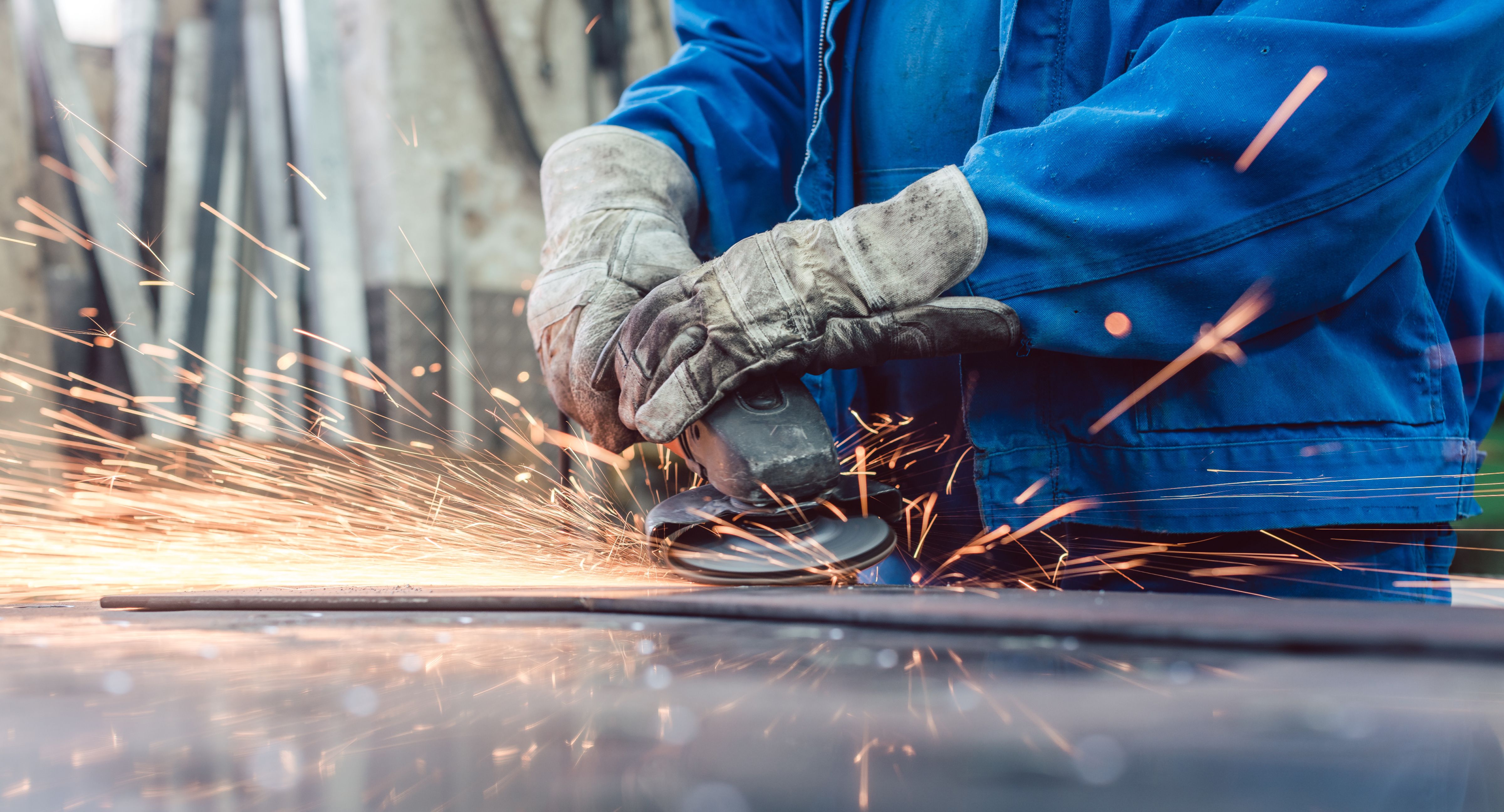
Off-the-shelf components rarely meet the demands of industrial equipment. When machinery is custom-built, infrastructure is uniquely configured, or tolerances are exceptionally tight, custom metal fabrication becomes the only viable path to parts that actually perform. We provide precision metal solutions engineered for the specific requirements of industrial clients — from single prototype components to full production runs.
Why Industrial Equipment Requires Custom Metal Components
Standard catalog parts are designed for broad compatibility rather than precision fit. Industrial equipment often operates under extreme conditions — high loads, high heat, chemical exposure, or mechanical stress — where a close-enough component poses real risk. Custom metal fabrication addresses this directly by producing industrial parts built to exact drawings, tolerances, and material specifications.
When existing machinery is modified, upgraded, or repaired, replacement parts may no longer be commercially available. Custom metal work fills that gap, replicating legacy components or improving on original designs to extend equipment life and reduce downtime.
Key Takeaway: Industrial applications require components engineered to exact specifications. Custom fabrication is not a premium option — it is often the only option when standard parts cannot meet operational demands.
How Custom Fabrication Supports Unique Machinery and Infrastructure
Every piece of specialized machinery carries unique attachment points, load requirements, and form factors. Custom metal fabrication enables the production of brackets, housings, frames, gussets, and structural members that fit precisely within those constraints — rather than resorting to a workaround for an ill-fitting standard part.
Infrastructure projects face similar challenges. Mounting systems, support structures, and enclosures often require components shaped around existing conditions: irregular surfaces, non-standard spans, or site-specific load ratings. Our metal manufacturing capabilities allow us to produce those components efficiently, whether the job calls for one piece or one thousand.
Key Takeaway: Custom fabrication supports unique machinery and infrastructure by producing components that conform to the project, not the other way around.
Common Applications in Industrial Equipment and Manufacturing
Custom metal parts appear across a wide range of industrial environments. Common applications include:
- Equipment frames and bases — Structural supports for conveyors, presses, mixers, and processing equipment
- Brackets and mounting hardware — Precision-positioned attachments for sensors, actuators, and mechanical assemblies
- Guards and enclosures — Safety covers and protective housings machined or formed to fit specific machine profiles
- Wear components — Replaceable parts in high-friction zones, fabricated in materials selected for abrasion resistance
- Fluid handling components — Manifolds, flanges, and fittings for hydraulic, pneumatic, and process piping systems
Each of these applications benefits from metal solutions that are designed for the operating environment rather than adapted from a generic standard.
Key Takeaway: Custom industrial parts serve a broad range of functions — structural, mechanical, protective, and fluid management — across nearly every sector of industrial manufacturing.
Integrating Metal Components with Fiberglass or Composite Assemblies
Many industrial assemblies combine materials deliberately. A fiberglass enclosure may require metal inserts for structural reinforcement. A composite panel may need steel edge banding or aluminum extrusions to interface with a metal frame. These hybrid assemblies demand precise coordination between materials and manufacturing processes.
We fabricate metal components specifically designed for integration with fiberglass and composite assemblies, ensuring that attachment points, hole patterns, and surface profiles match the requirements of the composite side. This eliminates field modifications, reduces assembly time, and produces a finished assembly that performs as a unified system rather than a collection of mismatched parts.
Key Takeaway: Metal components integrated into composite assemblies require precise coordination during design. We engineer both sides of that interface.
The Value of a Manufacturing Partner That Handles Design, Tooling, and Production
Sourcing custom parts from multiple vendors introduces risk at every handoff — design intent gets lost, tolerances stack in the wrong direction, and production schedules slip when suppliers don't communicate. Working with a single manufacturing partner that manages design, tooling, and production under one roof eliminates those gaps.
Our team engages at the design stage, identifying the most manufacturable approach before committing to tooling. We manage tooling in-house, which means faster iterations and tighter cost control. And because design, tooling, and production are integrated, what gets built matches what was engineered — every time.
Key Takeaway: A vertically integrated manufacturing partner reduces risk, compresses lead times, and delivers metal solutions that match design intent from the first part to the last.
Custom metal fabrication is the foundation of reliable industrial equipment. When standard components cannot meet your specifications, we build the parts that can. Contact our team to discuss your application and get a quote for precision industrial parts tailored to your project.
 Message Us
 Repair
 Message Us
 Repair